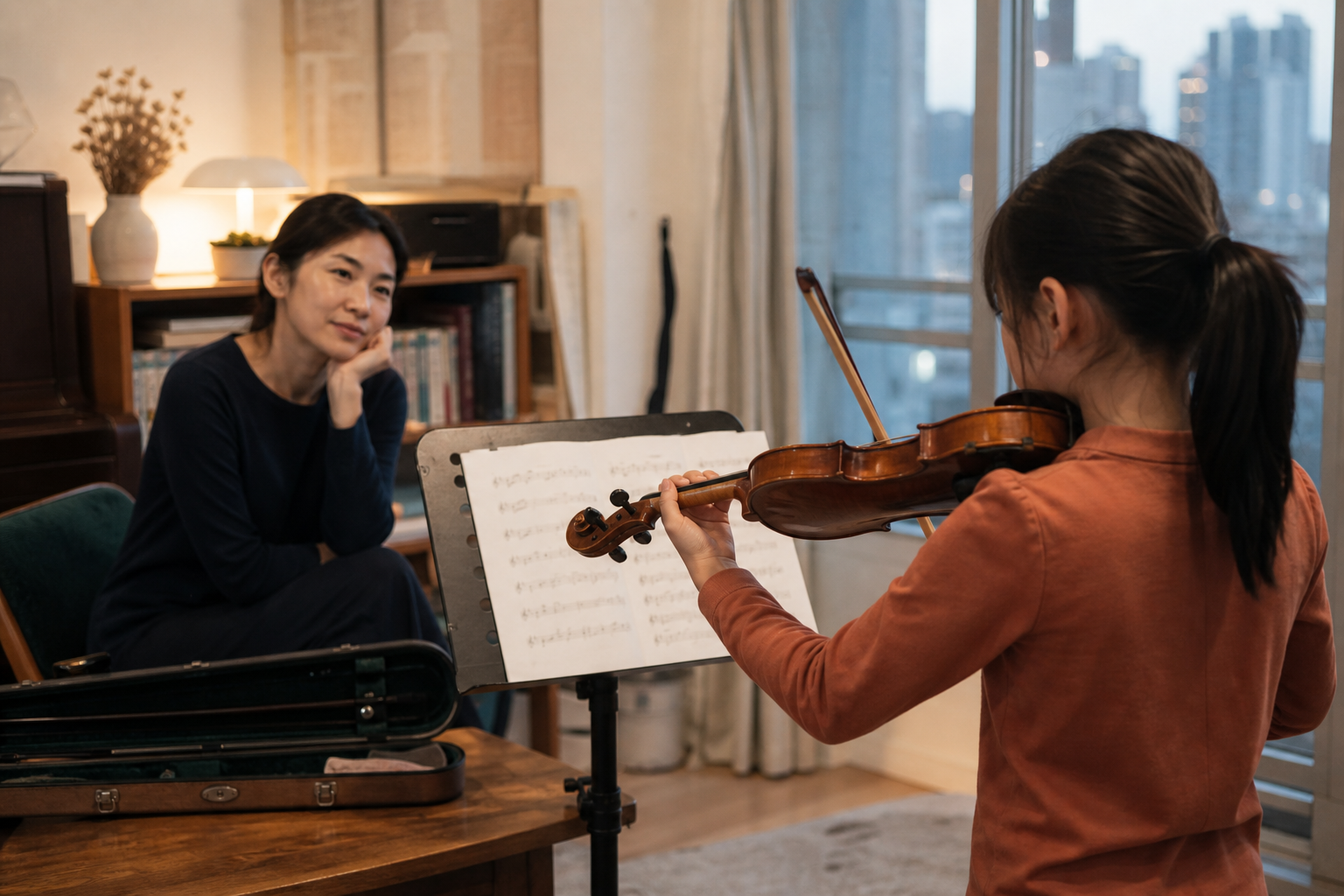
Academic progress is relatively easy to track: test scores, grades, teacher comments. Musical progress is less visible, which makes it harder for parents to assess whether lessons are actually delivering results.
Six signs lessons are working
- The student practises without being told, at least sometimes.
- The student can explain what they are working on and why.
- Practice sessions have a clear structure: warm-up, specific focus, run-through.
- The student receives specific feedback in lessons, not only “good, now do it again.”
- Progress is visible quarter by quarter through new repertoire, stronger technique, or clearer musical understanding.
- The student is not afraid to make mistakes in the lesson.
Three signs something needs to change
- The student has been on the same piece for more than two months with no clear explanation of what is blocking progress.
- The teacher’s feedback is consistently vague: “needs more expression” or “play it more musically” without a concrete route.
- The student is progressing technically but avoiding music recreationally.
What parents can ask after a lesson
Instead of asking “was it good?”, ask:
- What are the two things you need to practise this week?
- Which part of the piece changed today?
- What did the teacher say was better than last week?
If the student can answer, the lesson probably had structure. If they cannot, the issue may be communication rather than effort.
Summary
Working music lessons create visible changes in how the student practises, listens, explains problems, and handles mistakes. The signs are there, but they look different from school grades.