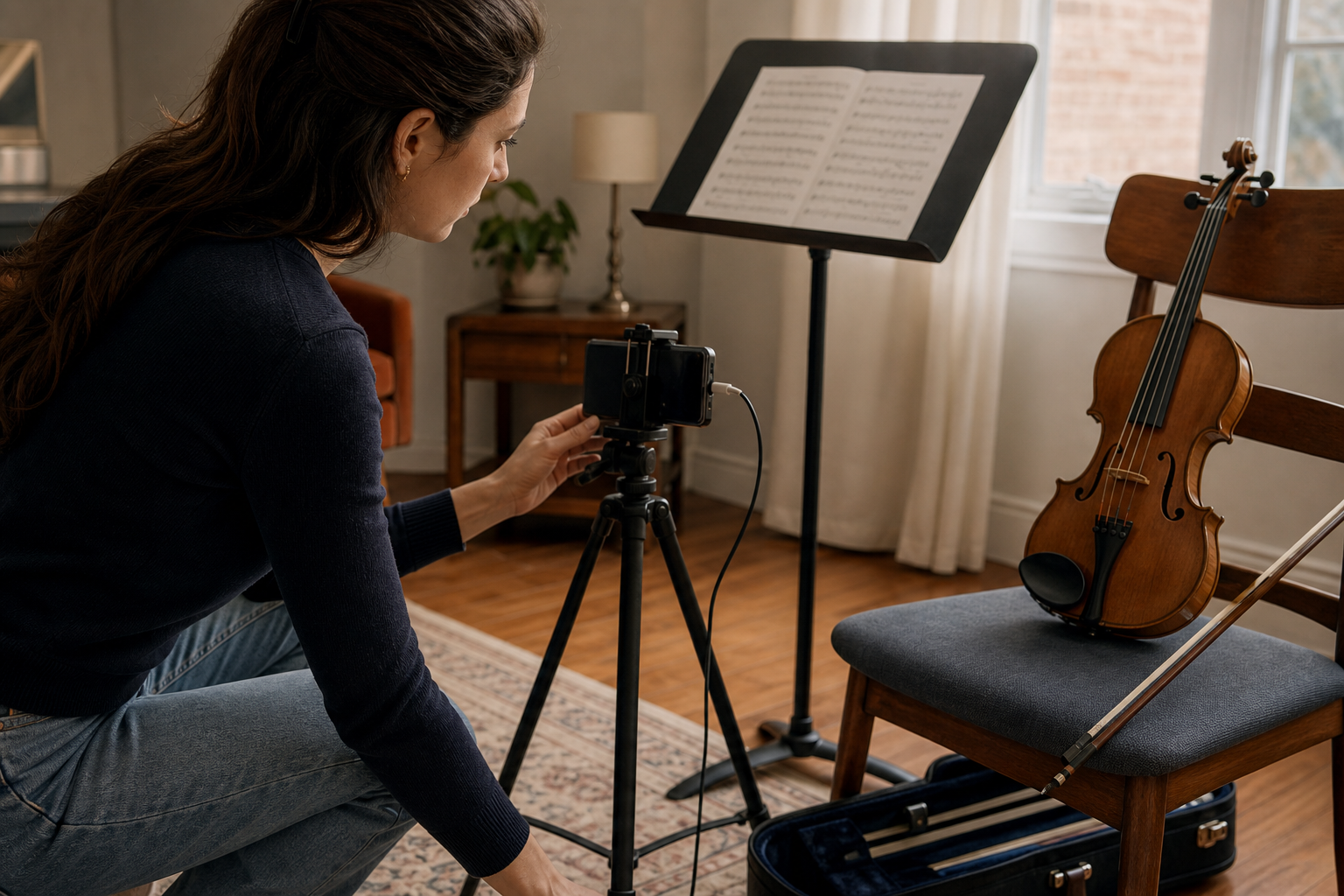
An ABRSM Performance Grade recording is a single continuous take of the full programme. There is no editing, no pause between pieces, and no second chance after the upload button is pressed. Once submitted, the recording cannot be replaced.
That is where a pre-submission recording review changes the calculation. Instead of guessing whether the recording is ready, you receive a structured assessment with a cautious score range, timestamped comments on each piece, and a clear submit-or-rerecord recommendation.
This guide walks through what a recording review covers, how the feedback report is organised, and how to interpret the result.
What a recording review checks
A review is not a practice lesson. It is a submission-readiness assessment. The reviewer watches the unedited recording as an examiner would and evaluates four areas.
Musical security. Is the programme consistently prepared? Do individual pieces show technical control, rhythmic stability, and a convincing sense of line? Are there sections that feel unfinished or risky at the current level of preparation?
Performance continuity. Because the exam is a single continuous take, the reviewer also assesses stamina and pacing. Does the programme hold together from the first note to the last? Do transitions between pieces feel intentional or unsettled? Does the energy level drop in the second half?
Recording presentation. The reviewer checks what an examiner can see and hear: audio clarity, visual setup, page-turn management, and instrument positioning. A recording with good playing but poor audio can still lose marks, so these practical details are part of the assessment.
Submission readiness. The final recommendation answers the single question that matters most at this stage: is this recording ready to submit, or should the student rerecord?
How the report is structured
After the review, you receive a report with four sections.
First, an overall estimated score range. This is not a guarantee. It is a cautious educational estimate based on current ABRSM standards. The range shows where the programme is likely to sit if submitted as-is.
Second, piece-by-piece comments with timestamps. Each piece gets targeted feedback on what worked well and what carries the most risk. The comments focus on the decisions that matter most for the score: accuracy, musical detail, tempo consistency, and presentation.
Third, a priority list. The reviewer ranks the issues by submission impact. The top priority is nearly always the single change that would move the estimated range most: a specific tempo problem, a recurring intonation issue, a structural weakness in one piece, or a recording-quality concern.
Fourth, a submit-or-rerecord recommendation. This is the practical bottom line. The recommendation falls into one of three categories:
- Submit: the recording is ready. Minor imperfections exist but do not threaten the result band.
- Rerecord with targeted work: the programme needs specific improvements before submission. The report explains exactly what to fix and in which piece.
- Rerecord after more preparation: the programme is not yet at a secure level. More lesson time and practice are needed before a recording attempt.
How to use the feedback
The most common mistake students make after receiving a review is trying to fix everything at once. That approach usually lowers quality rather than raising it.
Instead, follow the priority list in order. Begin with the highest-impact issue. If the priority is a tempo problem in Piece B, spend the first practice session on that tempo. Ignore everything else until the main issue is resolved.
Limit rerecording attempts. Set a maximum number of serious takes before reviewing the new version. The goal is not a perfect take. The goal is a take where the priority issues are resolved and the overall performance remains musically alive.
If the recommendation is to rerecord, the reviewer is available for a short follow-up. The same reviewer who knows the original recording can confirm whether the new take addresses the issues before a second full review is needed.
A review is most useful when the deadline is close but not urgent
The ideal time to request a review is when the programme is largely prepared but the student or teacher is uncertain about submission readiness. That is usually two to four weeks before the planned upload date, leaving time for focused improvements if the recommendation is to rerecord.
A review ordered the day before submission can still flag obvious risks, but it limits what the student can do about them. Allow at least one week between the review result and the planned submission date for best results.
Summary
A pre-submission recording review replaces uncertainty with a structured verdict. It checks musical security, continuity, and recording presentation; returns an estimated score range and a clear recommendation; and prioritises the changes that would make the most difference.
For students preparing ABRSM Performance Grades in Hong Kong, it is the closest thing to an examiner’s perspective before the real submission.